Friday, 11 December 2009

Critique of Christianity part III: Purity


For my next issue with Christianity, I wish to cite a few passages from the Gospel:

But I say unto you, That whosoever looketh on a woman to lust after her hath committed adultery with her already in his heart. And if thy right eye offend thee, pluck it out, and cast it from thee: for it is profitable for thee that one of thy members should perish, and not that thy whole body should be cast into hell. […] Be ye therefore perfect, even as your Father which is in heaven is perfect. (Matthew, 28-29 and 48).

Quite harsh, isn’t it? Just looking at a woman and thinking that she’s beautiful already means having sinned (it is also an androcentric passage, which is another problem with Christianity throughout, but because I don’t like to fight moral battles that are not my own, I’ll leave the ladies to dissect that). Any man can tell you that if these are the directives, then we’d all have to be blind by now – it is impossible to see a beautiful woman without some form of a fantasy, however brief, taking shape in our heads.

This goes hand in hand with an argument that Christians often made when trying to convert me. When I enquired as to why God was reluctant to get in touch with me, some of them argued that it was logically impossible for Him to do it – because I was impure, and that which is pure can never come in contact with the pure. It is enough, they would say, for one alien particle to enter a glass containing a liquid of a single element, for that glass no longer to contain that element in its pure form. I was the alien particle, God was the glass, and therefore He could not accept me until I took my ‘leap of faith’ (usually variant in its execution according to the speaker).

I’ll pass on the moral debates around the above argument, but I’ll pick up on something which is expressed in Christianity in its original (textual) and contemporary forms alike. This religion is in love with the notion of purity. Obviously one can see how God would be ‘pure’ (or, to use a more common term, ‘perfect’). But why does Christ tell to His human disciples, ‘Be perfect’?

The issue is not whether it’s a fair request or not (it obviously isn’t). A Christian would respond, quite rightly, that it’s not about asking us things which are fair, but things which are good, regardless of compromises or bartering with our condition as sinners. The point that I’d like to question is whether asking us to be pure really means asking us to be good – or more to the point, whether trying to be pure, as Christianity exhorts us to do, really leads to us being good.

Either way, repression – as in the repression of one’s lustful desires by ripping your eyes out – hardly seems the way to go. If purity means desensitizing oneself to something like the beauty of a woman, how does it differ from chemical castration? And how far does it go? If I’m ‘pure,’ will I no longer feel that lovely, sly, smug sense of satisfaction I experience when my rival sports team loses? Will I no longer take pleasure from violent action films, or laugh at coarse comedies? Will all the ‘lowest’ pleasures of my life be erased?

Yes, answers Christianity. And this is one bit where we disagree. To them, the ‘low’ or ‘base’ or ‘vulgar’ side of humanity is to be looked down upon – it is a side-product of the fall from grace, a special kind of dirt that forms over the windshields of the soul. To me, not only is there nothing wrong with these kind of feelings (as long as they are not allowed to flourish into obsession), they form the necessary and healthy counterbalance to those parts of us that are noble and high and idealistic – we couldn’t take the pressure of the latter without letting out steam through the former. We cannot enjoy the celestial music of Beethoven if we are not allowed to occasionally sit on our sofas eating an absurdly expensive Ben & Jerrys while watching Firefly. We cannot be true and kind and intimate to our friends if we are never also swearing loudly together as we joke about each other’s sexual shortcomings (among men that’s the case – women probably have different expressions of ‘low’ behaviour!).

To me, purity is not human. Christianity does not share in this belief – purity is not only fair but healthy as a standard to pit people against. This religion purports to love humanity (or at least man) by putting him at the centre of creation, but it is actually quite selective in the bits of it that it chooses to love, relegating the ‘low’ parts to the influence of the devil instead of recognising their participation in the tree of our self. This position is incompatible with my feelings because, as a humanist, I acknowledge the human spirit in its entirety – in its potential for achievements as well as its potential for blunders, and in its capacity to pick itself up from them. Not in the sense that I love evil, but in that I understand that having the potential for evil (our condition as sinners) is necessary for us to do good. If purity is not human, I don’t really think it’s healthy for us to pursue it, nor do I believe that it will lead to great good. The best way for a person to be able to do good is to keep her faith in her moral potential (pride) alongside an understanding of her natural moral limits (humility), that is to say, that she cannot reach perfection. Thus, instead of expending energy and becoming unhappy by means of self-castigation when one caves in to the pressure of our natural desires (for instance masturbation, or eating chocolate), we may accept our impurities as an expression of ourselves. This lets us place them in the sphere of our privacy, watching violent movies without feelings of guilt, and letting our energy go towards constructive interaction when in the sphere of the public, rather than repression. This is what it means to become a better person; you cannot be a good person within society if you are not happy, and pursuing purity never leads to happiness. Hence purity does not make you a good person, however much Christianity insists that being pure is the only way of being good.

Besides, even in its evangelical description the idea of reaching morality through repression seems dubious. A guy who rips his eyes out so he won’t have lustful fantasies when a woman passes by is not a good person, he is just blind. I don’t know how others read it, but I can’t help but feel that the Gospel itself ends up suggesting (albeit indirectly) that purity is not a moral quality, and therefore that the teachings of Jesus Christ are not so much moral as they are aesthetic.

I wish to stress the point in the above paragraph because it really is important. As long as something is pure, it is divorced from questions of morality. Morality, in itself, is inherently impure. I do believe that spiritual illumination is possible, in this life; however, I also believe that it is the outcome of a torturous, painful path, often through our own sin and mistakes. Christianity agrees with me so far, but it draws a different conclusion from this premise. To me, a greater moral awareness comes from having experienced both poles in the human spirit, the constructive and the destructive one, and learning how to balance both in our lives, rather than learning how to banish either from our experience. It is a balance between light and darkness rather than an embracing of light – and an intrinsic process of learning and absorbing. That’s why the difference between any two poles in our spirit is not one between ‘good’ and ‘bad,’ because these are meaningless labels attached to two sides which both need to be understood and absorbed in our experience – and this is where Christianity parts way with my thought. As we have seen in the discussion on pride and humility, Christianity is organized according to dialectical structures, assigning one side to the ‘bad’ and the other to the ‘good’ and then proceeding to a condemnation and demonization of whichever side it chose to deem ‘bad.’ I don’t buy this; both sides of any sentiment in the human spirit are legitimate and true to our own selves, even the ones which might risk hurting others, and both sides have the potential to be un/ethical according to a life’s contingency. The faculty of our judgment to select which pole will be the right one is what we call our morality, and it will be the more advanced to the measure that it possesses enough experience of both poles to choose rightly. As such, our morality will never be pure, but it will only be great because – and not despite – the fact that it has come to know the opposite of itself.

This, then, is another important difference between my worldview and the Christian one. I don’t endorse asceticism or purity, and for that matter I don’t endorse anything that negates the lessons we can learn from the raw world of feeling and the underbelly of pain and sin. My suggestion to you is contrary to that of Jesus Christ: don’t go out and try to be perfect. Go out and pluck those damn apples of knowledge, and find out for yourself whether they taste of mud or not.

Thursday, 10 December 2009

Critique of Christianity part II: Demonization of Pride


To begin with, then.

Christian ideology has an underlying dialectical organization, one most explicitly revealed in the opposition of heaven versus hell. The fate that is assumed for the human soul is dual: you are either saved or not saved. There is no inbetween (purgatory is not mentioned in the Gospels and was only introduced at a later date, and anyway it’s only a suspension or transition between the two poles, not an alternative; incidentally the vast architecture of heaven and hell was conceptualised mostly in later periods as Roman and especially medieval imaginations were allowed to run rampant, but the foundations for the notion of heaven and hell are pretty obvious in the Gospel). The dualism which is assumed in such a cosmological organization reflects itself, in Christianity, in its representation of spiritual virtue. In other words, it establishes the opposition humility versus pride, then assigns all good to humility and all evil to pride.

This is my first note of dissent with Christianity. I simply cannot commit myself to such an absolute point of view – more specifically, I cannot identify the sentiment of pride with evil. I have spent a few words on the virtues of humility, but I don’t think these virtues are enough to make of pride an ‘evil’ or ‘unvirtuous’ sentiment. The fact that munificence has some virtues (generosity, anti-materialism), for example, doesn’t mean that parsimony is inherently evil (unless we flip the question through semantics – instead of saying ‘parsimonious’ we say ‘miserly,’ thus inserting the condemnation already in the choice of words. But this is untenable because it can instantly be reverted; what prevents me from changing ‘munificent’ to ‘lavish’ and turning the entire ethical principle on its head?).

Pride can be a source of evil council inasmuch as it can lead us to refuse what’s good (for us, for others) only as a way of preserving the integrity of its sentiment. God gives us salvation and love, but we are too proud to accept it – this is the classical view of damnation, and this is why it is by our own fault rather than God’s that we plunge into hell. And indeed it is wrong to be so proud, and in such a way.

But this view of pride is limited. Much like there is a negative side to pride, one which goes hand in hand with the negative self-deprecation and inertia that results from excessive/formal humility, so there is a different side to pride – one which reminds us of who we are and what the worth of our dignity is. Consider the following three situations.

a.) A guy really likes a girl and makes out with her one night, then a few days later she makes out with another bloke when they are out together. She then feels like perhaps she has wronged him and she re-approaches, offering friendship and warmth. The guy remains civil but he does not respond to her approaches anymore and from then on is cold with her whenever they cross. (The sexes can be swapped – I’ve known it to happen both ways).

b.) Here is a joke, abbreviated: a group of cannibals renowned for killing people and using their skins to build canoes capture an innocent way-wanderer. They tell him they’ll kill him, but they grant that they’ll satisfy any last wish he has, be it sex with a dozen women or a shot of the cleanest heroine ever or the greatest banquet in the world. He simply asks for a fork: when they bring it to him he starts stabbing himself with it, telling them as he dies, ‘You’re not going to make a canoe out of me.’

c.) In World War II, a Russian soldier whose entire family has been slaughtered by the Nazis is fighting in the battle of Leningrad. He is wounded by a grenade and falls in the hands of a group of Nazi soldiers. These soldiers appear to have no problem with the idea that their prisoner might recover, so they don’t keep their medication away from his access. But the Russian refuses to use their medication when they offer it to him and he dies of blood-loss instead.

These three situations all describe instantiations of pride; they all describe a case in which someone is offered something good, yet refuses it because of pride. The guy refuses the love of the girl he fancies, the wanderer refuses the indulgence of pleasures that is being offered to him in exchange for a painful death, and the soldier refuses medication. Pride leads us to hurting ourselves with no good coming out for anyone.

Yet all of these little stories contain a message. The boy is telling the girl, ‘I’m not going to be your toy; you cannot use me, throw me away and then pick me up again as you please.’ The wanderer, by putting his self-damage above his pleasure, asserts the barbarism of using a human body as building material for a canoe. And the soldier asserts the evil of the family-murdering Nazis by refusing their right to offer what is good.

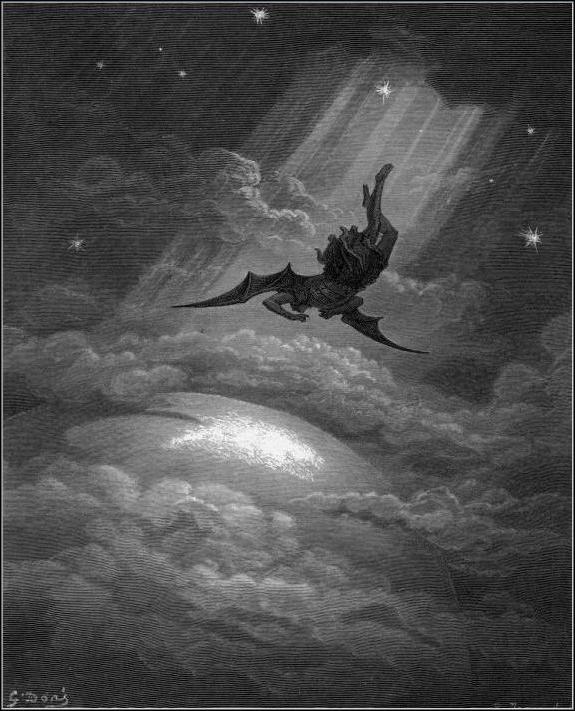
The first story in particular gives an example of the necessity for pride in the human spirit. If the boy had no pride, what prevents him from becoming the object and toy of any girl he becomes infatuated with? This is why the expression ‘Have you no pride?’ is usually employed as a reproach. It recognizes the importance of pride in asserting oneself and preventing other people from stepping all over us. In Christianity, all forms of pride are demonized. Pride is the first of the capital sins and the sin par excellence of Lucifer (admittedly here I’m steering towards later sources than the Gospels, but the traditions have become so engrained in Christian ideology that I feel it’s legitimate to cite them as well; anyway they’re not in contradiction with anything in the original text and they’re quite concordant with teachings in the Old Testament). By taking away the evil inherent in pride, you end up taking away the good as well (much like Dawkins does with religion itself). A man who takes no pride in his work does not do that work well. A man who takes no pride in his culture will not stand up to defend it.
Proud, yeah.

Above it all, a spark of pride asserts one’s agency in whatever the situation. Much like the boy declares by his act of refusal that he is not an object to be played with, and demonstrates this by his own decision to select a trying solitude over pleasing company, so the self-defeating act that we identify with pride is at the core of all free will. Lucifer assumed infinite pride, and first declared free will by demonstration. He assumed an infinite punishment for this. The repression of pride by Christianity then makes sense in the light of an hierarchical system of heaven (it is, after all, called the kingdom of heaven). Something like Christianity could not have sustained itself across the ages if it offered to its subordinates the possibility of independent action that is also ethical; that is to say, the possibility of a sentiment that originates from the self without being attached to or stemming from the kingdom of God, yet is still ethical and legitimate and dignified and right. This is exactly what a feeling of pride represents – the sense that we have a right to exercise our will and that no-one from the outside, however powerful, however mighty, can tell us ‘your feelings are wrong.’ For obvious reasons such a sentiment is not compatible with the concept of a God, and for this Christianity must reject it, painting it as the ultimate evil.

One of the reasons why this is not sustainable is that it fails to acknowledge that being a Christian means, primarily, assuming Christ as a choice, in other words, by an act of free will. There is an element of ‘rejecting the good’ in this choice too, since Christians choose poverty, asceticism, persecution and offering the other cheek over all the possible pleasures of the world, but this is kind of invalidated by the fact that greater good is later promised in heaven. At all events, in rejecting the human element of pride, Christianity unwarily blasts the seed that is at the core of its own promised salvation.

This is why the human spirit cannot be understood in dialectical terms (much less absolute ones), at least not from a moral point of view. Christianity not only contradicts itself by disowning the foundation of pride necessary for the free will which it invokes, it also denies the greatness of the human spirit by failing to account for its inherent ambiguity – its capacity, its necessity to contain and utilise both pride and humility, alternating elements of both in our walk of maturation.

A cursory look at the history of our literature better exemplifies this ambiguity. There’s poems which preach humility and call it the way towards wisdom (Eliot off the top of my head). There’s others which refuse to be humble, assert pride and also speak of its necessity (Baudelaire and Rimbaud, though somewhat erratically). So if two points of view are in contradiction, which one is right? The answer is – both of them, because they speak about different things (the possibility of several contradictory statements all being true simultaneously is important and I shall come back to it). Pride is what we need to face up to the outside world; if someone wishes to use you, your pride will keep you from being used, however seducing his / her offers may be. Humility is what we need to deal with our inner world; by understanding our own limits, we learn how much (or how little) we really deserve, and that measure becomes the wisdom by which we are humble to others and treat them with at least as much respect as we wish to be treated ourselves.

Christianity does not recognise this duality in the human spirit and does not forgive the pride I put in all the things I do. As such, it does not respect a true aspect of my self and my experience, and for this reason I cannot abide to its doctrine.

Monday, 7 December 2009

A Critique of Christianity: Prolegomenon


There’s an issue which comes up again and again when I chat with Christians who are trying to convert me. Perhaps surprisingly, it comes up with persistent frequency even when I speak with atheists who are trying to figure why I share their metaphysical scepticism. Both parties seem to think that I’m not a Christian because I don’t believe in God. The argument does hold some logical merit (I must admit), but it overlooks the question that to me is really pressing, and for this reason I shall expose it today.

You see, I don’t think it’s really important whether you believe or not in God. Some of you may disagree with this strongly, but it’s really not my first priority. What really matters to me is whether your dis/belief is something that leads you to connect and build bridges with other people, or whether you use it as a means to build walls between yourself and the experience of others. This distinction holds for atheists and believers alike, which is why it takes precedence over the more specialised questions of how and why you entertain a specific kind of faith.

This is also why I take my distances from the ideology of someone like Richard Dawkins (I might as well state this now) – not because I think there’s any immediate flaw in his reasoning, but because his reasoning is insufficient. It points out several things which are wrong with Christianity and religion in general, but it does so in such a way that it pulls a blind also over the things which are right. For this reason it is not constructive. Much as I admire the merits of The God Delusion (and I really do, for it combats religion in its discriminatory expressions, which are many and dangerous), atheism cannot take a form which refuses to engage with the principles of Christianity. It simply cannot. If that’s what it does, then it is only closure, and this leads to nowhere. Certainly not to spiritual illumination, which is something more profound than simply believing that yes, there is indeed that big guy up in the sky. Similarly Christians cannot refuse to engage with a text simply on account of the fact that it does not share – or even that it flat-out rejects – a Christian world-view. Much like atheists have a lot to learn from Christianity, so Christians should become aware of how much they have to learn from Nietzsche, Camus, or even Dawkins himself. The act of learning includes absorbing what’s right while filtering out what’s wrong, not blotting out anything that is not ideologically immaculate. In starting to open themselves to these people and reading them, holders of differing viewpoints can start learning from each other. Atheists can learn the humility that Jesus Christ teaches us and apply it in their everyday lives, even if they don’t believe there is a God to punish or reward them for it. Christians can learn from Nietzsche and Camus self-reliance, the joy of being alive and the value of the present, ephemeral moment, a view which loves life through the immediate and not just the transcendental. Atheists and Christians can learn from each other not in spite but because of their fundamental differences in worldview.

On this account my issue with Christianity does not relate to the in/existence of God. I do believe that I share a lot with Christian ideology: it teaches (personal and historical) humility, as I mentioned, and it is the earliest expression of pacifism that I know of. As importantly, it understands that pacifism starts in the spirit rather than being a mere social system – the pacifism and humility of those who see history as the mutilated body of an innocent on the cross, in Terry Eagleton’s words. Ours is a bloody heritage, and the Christian courage to acknowledge this is one of my favourite things about this religion – and, ultimately, one of the principles it asserts which is closest to my own spiritual principles.

So, given that I don’t think that dis/belief is really an issue that can separate two people in their way of life, on what grounds am I not a Christian? What is it, beyond the empirical statement ‘I do not see a God,’ that makes me feel like Christianity is not the path for me? How can we engage with Christianity in ways that go beyond the age-old query ‘is there a God?’ which has so long blinded us to other, equally important questions inherent in the adoption or rejection of a religion?

There are a number of principles which I don’t share with the Christian religion. I’m not saying that they are wrong in and of themselves, but they clash with my own personal sensibilities and my sense of justice, they are disharmonious with my experience and understanding of the world, and as such I feel it would be an act of insincerity if I were to ascribe to them. I wish to spend the next few posts to explore them.

One post every two days, four or five posts. And that will be my critique of Christianity done. See you here, see you soon.

Friday, 4 December 2009

The World Cup Draw!


So I was sitting on the sofa scratching my balls, when some lights on the TV catch my attention and it turns out that there's something I'm interested in: it's the ceremony of the draws for the World Cup group stages! I saw it and wrote a serious article on it which can be found at footballitaliano.co.uk (probably Saturday or Sunday, not at the time of writing). I didn't really have space there to discuss the ceremony itself, so I'd like to dedicate some minutes to it here.

I'd like to do this because I've never seen a process more mysterious as to its purpose than this show. What people were doing there and why is something that I spent most of its duration puzzling about. It started off with some random images of good-natured people in Africa, presumably because the producers thought it would be in bad-taste to open the World Cup ceremony with images of civil-war bombings in Zaire or the Apartheid, and I thought that that was good. It was fun and it made for a sweet introduction. Then we're led to the podium for the spectacle itself, which struck me as remarkably resemblant to the one used for the Oscars (they might have rented it in the haste, unless they were planning on rewarding Thierry Henry's diving skills - they're even better than his recently displayed and much admired volleyball skills, check them out).

Here we go, the draw is about to take off! ...No wait, there's some fat white guy with a guitar who has to play a song or something before we can all start. Whatever. It's pretty dire stuff and his fat-rolls are bouncing underneath his sweat-patches, so it doesn't make for superb television to be honest. When it ends, even the commentators of the Italian TV can't help but remark that "this isn't going to top the charts in Italy." Then Charlize Theron is invited on stage and I obviously start scratching my testicles again - saucy lass. She makes some pointless speech on how excited she is and how she obviously never gave a fuck about soccer herself but she nonetheless hugely respects the sport and the passion and the players and yadda yaddee doo. Not sure why she was called on if she doesn't like football, perhaps for the size of her boobs, which admittedly made me reel when she presented the new football - the jugs are about the same friggin' size!!!! Oh God, marry me Charlize. At that, and as though anyone gave a flying shit, we are shown an ad that has been running on South African TVs for the past year or so and which explains the history of the World Cup in the most cloying rhetoric. Mmmmkay. Are you going to start the draw now?

No! This gigantic barrel of lard of a woman comes roiling on stage like a mammoth sporting a hangover and she starts singing! It reminded me of this. As in accordance with the disney video, the music is a bit better this time, so at least I can get my hand off my balls while a bunch of singers are leaping up and down the stage for some reason which appears completely disconnected from the music.

The musicians get off, what a relief. At that point Blatter is invited on stage. Fuckin' hell. I take it back, I'd rather have the musicians. Blatter is a character I've always found to be INCREDIBLY IRRITATING, not only because his name sounds like the Italian word 'blatta,' which means 'one foocking oogly bug' (so 'blatter' would probably mean 'the mother of all them foocking oogly bugs'), but because he is the dimmest, most arrogant prick in the world of football. Cue his single-handed arrest of the process of five-man refereeing for 2010, something which we all would very much have needed. Until Blatter gets out, there will be no progress in the books of this tournament - and until he's found having his testicles squeezed by leather-dressed Nazi prostitutes like Mosley did, I fear that that's so not going to happen. *sigh*.
Oooohhh, look at me, I'm flirtatious!
Blatter starts telling the interviewing lady how he came to the country and immediately fell in love with it. Then we are treated to the pathetic show of him making a pass on the interviewing lady: apparently he is also falling in love with her. Ooohhh this is painful! Finally he is sent away (to everyone's relief) as some athletes are called onstage to draw from the urns. First there's a marathon runner, then a rugby player, then... hold on a second, David Beckham?? What the fuck is he doing there? Did they even let him through customs with that hairstyle? He could be hiding a frat-bomb in there, man.

Finally we can start with the draw.

...No! Onstage runs a group of guys dressed like Denzel Washington in the dance scene of "Malcolm X" and they start fucking singing! Most embarrassingly, they start asking the audience to clap their hands and all that shit! Unbelievable...But! The face of Domenech as he has to clap in tune like a kindergarden assistant is so priceless that it could probably make it onto a Mastercard ad. Hah!

Then they shut up and, finally, draw the names. The entire process could have been executed in ten minutes. Man, it wasn't worth interrupting the scratching of my balls for that. But Charlize Theron was definitely worth it. Hmm-hmmmm.

Saturday, 28 November 2009

So what's going on, mate?


Things are a bit inert these days, and I think the blog reflects this. It’s not that I’ve lacked subjects to post about – in fact, that I’ve just completed an epic sequence of posts on a really heavy subject, so you can look forward to some bad shit going down.

I’ve given my notice from my job here in Paris and I shall be departing from the country shortly. I leave France with an enormous cargo of good memories. Enough to make me believe I’ll romanticise this place in ten years’ time, but what the hell – if you can’t romanticise Paris, then what else can take that role? My next stopping place will be Italy, where I intend to spend my Christmas holidays looking for my next job. I mean to work at sea, this time around. Not sure doing what exactly – I’ll get on a cruise, a fisher-boat or even a pirate ship if that’s what it takes, but I want to be on the big blue. Call it my Melvillian aspiration.

I hope to find the job before the end of January, because that’s when I’m leaving for India. I’ve got a journey planned over there. Three weeks, and who knows, maybe longer – if I were to find a job down there which doesn’t involve something as gross as swiping the shit from cows off the temples, then I might just stick to it. I’d love to spend a few months in India, though probably no more than that. My future is in Europe, as after all is my past.

At the moment, I have just two days of work left to go before I quit this country, so most of my days I am spending evenings in Paris, each one of them a little more final. Shall I return, someday? Who knows. I certainly hope so. Paris gave me a lot, and I have almost nothing to give in return. It’s not much and not total, but in the meantime, here is the only sonnet that I wrote to this city – one which was on commission (the italics on 'Paris' are there because it's meant to be pronounced the French way).

Paris, Paris, I have not come to light
Or spin you, I’ve not come to sing la Senne,
My throat seeks no refreshment from your night
And I’m not asking where to go or when.
For pilgrims are no conquerors, who come
To seek the root of their humility,
That common street where all their roads are one
Behind the mask of your plurality.
Paris, you’re not the basin of my past;
You are a road, but you lead not to Rome.
– And what is Rome if not a bust (the last)
That honours ashes, cinder dressed as home?
Paris, teach me the junctions of the way
For us to noble or ignoble clay.

There will be others. There will be more. But now I need to metabolise what I have seen, what I have experienced and anything else. City of lights, city of shadows, city of damned poets (and overpriced poetry), city of more than I can tell, I could never find the words – much less the heart – for an adieu. I’ll do it my way: thank you, and arrivederci.

Saturday, 14 November 2009

2012 Review


I don’t usually do film reviews on here unless they’re retrospective ones for old films which need to be reconsidered, but I was taken to see 2012 the other day, and at the time of writing I’m sitting on a train with nothing better to do than drawing Mandelbrot sets onto the seats, so here goes.

2012 is an apocalyptic movie, one of those things where five or six characters are given a string of interweaving stories as a backdrop so that the film to stage its special effects extravaganza and we can all enjoy watching big buildings being blow to cinders. In this case the stories belong, in order, to the following folks. #1. The black guy of the day (there’s always a black guy in these films, you could set it in Nazi Germany and there would still be a black guy), who also happens to be the young idealistic scientist who first finds out about the immanent apocalypse. Two clichés in one character, there must have been a special offer or something. Oh yeah, and there’s some government guy who is fat (and therefore bad) who acts cynical and serves as a counterpoint to the idealism of our young hero, yadda yadda yadda. #2. The President of the USA, also black (how original). Then there’s his daughter, who is there so we can give a romance to the young scientist. The US President ends up being one of only two world leaders who refrains from fleeing and decides to die with his people. The other one is the Italian prime minister (LLLLLOOOOOOLLLLL!!!!!) while the Queen of England is shown to abandon her people and bring her insufferable little dogs with her. Good to see that American screenwriters still have as much understanding of foreign political realities as I have knowledge on fucking sheep (and no, my knowledge on the subject has not gone up since the last time I made that joke).

I’m going to go down by a paragraph here, not because there’s any reason to do so, but because I like the idea.

#3. This guy is in EVERY disaster movie, every single one without exception – the white male who neglected his family to write his book and now finds himself connecting with them again through the catastrophe. His family: boy, girl, beautiful middle-aged wife, and the poor jock who married his wife after the divorce – the impostor, basically, whom we shall refer to as the Loser because that’s all he does throughout the movie – he acts as a loser. 4.) A Russian magnate (and therefore bad) with the funniest accent since someone asked someone else if the CIA ‘add yew pooshing too meny penzils’ (LINK), busy trying to save his sons.
Apocalypse when?
This is the film in a nutshell. As you can imagine, all of these people undergo a number of adventures and journeys in their efforts to reach the ‘arks’ that will save them, a few of them die (most predictably, the Loser), and eventually ‘new hope’ is promised. All good? Weeeellll, not really, and this for reasons beyond the fact that this film is basically the photocopy of the five-hundred disaster movies that preceded it (seen one, seen them all, really). I’m sure you’ll be able to pick up on that at first glance – much like you’ll be able to pick up on the scientific loops of logic, the racist / nationalistic political agenda, and all the other stuff that makes this film so bland and generic. So I won’t go into that, but I will instead point out what I thought to be the major flaw with this film, the thing that makes the whole edifice fall down (forgive the irony about edifices falling down). And I think it’s important because it shares this problem with the gazillion other apocalyptic films that have been made so far.

You see, disaster movies couch their special effects’ cabaret in stories of ordinary people trying to escape the disaster. In this, they stage the typical (male) fantasy, here found in the guy who returns to single-handedly save his family and thus reconquers them (also, less emphatically, in the young scientist who bangs the ‘inaccessible’ president’s daughter).

The problem is that these films portray a world in which it is unnecessary for people to take responsibility for their actions. The film goes to great extents to show how the Loser is such a loser and why the writer is in fact the perfect pater familias (eventually the film kills the Loser off, so nobody has to take responsibility even for abandoning him). But the Loser is in fact central to the most moving part of the film. This is a scene in the pre-Apocalypse bit of the movie when the Loser is trying to speak to his wife and keep the relationship together – by care, patience and effort. Alongside the nurturing and attention that he offers to children who are not even his own, this stands in gigantic contrast to the more obvious, pyrotechnic heroics of the real father, who drives a car through explosions or fixes engines in underwater darkness. The film implies that by means of these ‘heroics’ the father is somehow exempted from his real duties as a father, or from paying for his mistakes at the time – the fact that he neglected them in favour of his book is no longer an issue. He is saved by the apocalypse. He gets his family back. Similarly the young scientist gets the girl – enacting the fantasy of someone who has no social skills but gets laid anyway thanks to exterior circumstances, vis, the Armageddon.

A film like this is depressing, of course, in light of the fact that this planet really is dying. It may not do so with the narrative pathos of these movies, but as long as we keep warming up the atmosphere or building nukes, the prospect of some disaster someday taking place on a global scale is very real – simply because we have the power to bring it along. If there’s ever going to be any way of preventing a disaster at home, then it’s going to be by taking responsibility for our actions – and what’s saddening is that the films which are supposed to warn us about these disasters are telling us exactly the opposite of that. They’re encouraging us to forgo our own responsibility and withdraw into our fantasy of apocalypse. Much like the father who failed in his relationship with his family, these films got it wrong. After all, this is how the world ends – not with a bang, but with a whimper.

Saturday, 7 November 2009

Second shot at the cinema


Once I wrote about an attempt at going to the cinema which had ended in abject failure. I feel I need some vindication, so here’s a quick sequel of sorts. My second attempt, I told myself, is going to work. I thought this with a profound sense of determination, one of those feelings which seize you when you’re strewn in mud and nothing sustains you but a spark of immortal pride, so I was certain it was truth. I still believe it would have been true if I had ever done anything to actually undertake that second attempt. Unfortunately I seem to find the activity of parking my buttocks under a palm-tree so enticing that I am barely even brushed by any other desire. I don’t think I would ever have gone to the cinema in Martinique if it weren’t for my innate Casanova powers of attraction.

One day I am walking around with a German friend of mine called Mikhail, sporting my snazzy sunglasses and what not, when these two girls woo at us and ask us to come closer. They want to sell us some eucalyptus smoking leaves, and my friend Mikhail, who is a very sociable guy and feels in a particularly jockey mood that day, takes the chance to start up a conversation. I on the other hand am pretty quiet – and somewhat taken aback too. I’ll admit that my tastes are often quite arduous, but even to the locals these two must look like a pair of combat bulldogs. One of them appears like a midway point between a brontosaurus and a World War II German Armoured Vehicle, the other one has a face which acutely evokes that of a frog. When placed together, they seem as attractive as a malaria epidemic. To top it all, and as I realise after approximately twenty seconds of conversation, they are about as stupid as the plants of eucalyptus they were trying to sell.

In any case I am indifferent to it all until the two girls ask us if we would take them to the cinema and to my astonishment Mikhail replies, all merry:

‘Why sure! What better way of spending the evening!’

I drag him aside for a minute and hiss at him: ‘What on earth are you doing? Have you seen those two walking scarecrows?’

‘Andrea, what are you, stupid? Can’t you see they’re pulling our leg?’

Apparently, according to Mikhail, the girls are trying to con us into going to the cinema on our own, walking away from the appointment themselves for a laugh. In short, they are playing a prank. I don’t know how he has reached this conclusion, but the guy insists and even gets quite heated on it. Eventually I think, ‘well, he’s the one who probably knows women better between us two,’ so I let him accept the invitation and we set off for the cinema which the girls have pointed out for us. It is an ungodly trek but I was really eager to go – my ancient desires of staring at a big screen had been instantly rekindled.

So there we march, wondering what film to watch, and when we get there, what do we see? Yoo-hoo! Les beaux mecs! Those two prodigies were there, happily waving at us. I’ll pass on the rest of the afternoon, and I’ll pass on the organizational skills of local cinema (it took them fifteen minutes to realise they were projecting the wrong film and another fifteen to change the reels, a time which I spent engaged in conversation with the brachiosaurus). When the time came to leave, they suggested that we go out to the city and I politely declined the invitation. I didn’t feel like furthering the interaction. Besides, by the time we were at the bus stop, they seemed to have found a suitably stupid-looking guy with a bandana tied up over his head and a truckload of those gigantic fake necklaces which rappers use to compensate for the size of their penis around his neck. They introduce him as a friend of theirs. So at least they are in good company, and I feel a little less guilty when I scuttle off to go home, completely dissatisfied with my time out at the cinema!