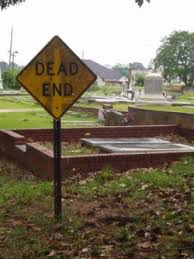
A recollection, to begin with. A couple of years ago I was working in Disneyland Paris and on one particular work-day - I forget the circumstance - I asked myself what exactly was irony. I usually reach a definition quickly when I pose myself these questions, but this time I found the word to be recalcitrant, and the more I thought about it, the less clearly could I see the concept taking shape. The funny thing was that for all my difficulties of definition, I felt like I 'knew' what irony was. I couldn't quite put my finger on it, but some part of my brain understood it perfectly, without assigning any words to it.
Taking it as an opportunity to start some conversations (something useful when you're practically surrounded by top-models), I asked around my British colleagues. It was amusing to witness that everyone seemed to be in my same situation: they seemed to 'know' what irony was quite well, in the sense that they could recognize an ironic event with ne'er the batting of an eyelid, but they had no idea how to give a concise definition of it. If you think it's easy, try for yourself. Close this article for the moment, think up a definition of irony, and post it in the comments section below. I'm genuinely very interested in reading what anyone comes up with.
As for the dictionary, its authors seem to think that irony is another word for sarcasm:
the use of words to convey a meaning that is the opposite of its literal meaning: the irony of her reply, “How nice!” when I said I had to work all weekend. Yyyeeaahhh, except that there's nothing *ironic* about the someone telling you 'How nice', there's only something *sarcastic*. The same dictionary then goes on to add that
irony differs from sarcasm in greater subtlety and wit. This is simply not true. Irony is not a milder version of sarcasm. It's when you're sweltering in your garden because you don't have a tree for shade, and you don't have shade because you cut down your tree in the winter to be warm. Sarcasm, in paragon, is simply a case when you're sweltering in your garden under the sun and you say 'How chilly.' (For those who want the full dictionary definition, you can find it
here. It's worth reading the whole thing).

At all events, the fact that everyone seemed to know 'instinctively' what irony was, meant that examples came aplenty. Perhaps the most synthetic and useful case-study was this:
Irony: having one-hundred forks, and needing a spoon.
Given my inability to come up with a rapid explanation, I decided to work on the example instead, breaking it down and trying to find how it produced this mysterious effect we call irony, recognizably distinct from other forms of humour, yet so much more difficult to pin down.
Two years later, at the moment of retrieving and expounding my conclusions, I remain surprised at just how complicated and sophisticated a concept this is. So complicated, in fact, that there's no way of just cutting straight into the matter of things. It will require some back-tracking.

Let's start with a very common type of linguistic humour, the confusion of two different (even opposed) meanings for the same word under a given circumstance. You say something, and it means something else (like the time I read of my university's 'mandarin society' having a reunion and I went there thinking I'd find fruit... never mind). The most simple example is given by a certain type of puns. Puns are jokes based on employing two different words (or groups of words) which are pronounced in the same way, like deer/dear, whine/wine, or 'no pun in ten did' / 'no pun intended.' You can't really write down a pun, because the spelling gives away the intended meaning and therefore the joke - the humour, after all, lies in the confusion of the two meanings. Here's a quick case-study:
A man walks into a bar with a giraffe, and they both get drunk. The giraffe falls to the floor, unconscious, and the man heads for the exit. The barman says, 'What, are you just going to leave that lying there?' And the man replies, 'it's not a lion, it's a giraffe.'When spoken out loud, the humour lies in the failure of communication inherent in the words lying/lion – it was supposed to mean one thing, but it ended up meaning another. Though this specific example contains an Absurd element in the idea of a man walking into a bar with a giraffe, the mechanism is essentially Fail humour. We laugh at the failure of communication, especially when the joke includes characters who embody that failure. The laughter is gregarious, because it depends on our shared understanding of the real meaning of the words. 'He,' the character in the joke, doesn't understand it, and 'we' do. Even if there is no 'he,' and there's only the linguistic confusion, the principle still holds: the effect of understanding the joke, of 'getting it,' of being 'in on it,' results in our approbation as part of a group - a fact which we signal with laughter. (An example of a character-less joke would be the immortal classic: 'What do you call a deer with no eyes? No idea / No-eye deer'. Still funny, and still for the same principle).
Now suppose that I were to label the meanings of the two words by means of letters. The meaning of 'lying' is A, and the meaning of 'lion' is B. The mechanism of the pun, then, is that of producing a sentence (or a whole situation) which builds towards meaning A, and then closing it with a word that carries the meaning B. This results in an incongruence, which we can express as A ≠ B.
This formula is Fail algebra reduced to the bone. A does NOT equal B, i.e., it *fails* to equal B. The guy *should* understand 'lying,' but he understands 'lion.'
 Here it is... a giraffe.
Let's turn to irony now. It is a type of compound humour, which is why I've kept it for last, and it always includes both a Fail and an Absurd element. The Absurd aspect is rather subtle and we shall come to it later, while the Fail can be analysed readily. In our example of the 'hundred forks and a spoon,' the 'failure,' the problem, the 'bad' thing, is needing a spoon and not having it. This in itself is a Fail, and therefore potentially funny, as long as it's happening to someone else. Having the one-hundred forks only highlights the incapacity of the subject to fulfill his desire and thus makes it funnier. This is given by the identity that subsists between forks and spoons: both are metal tools for eating, but they differ in the specific types of food. Without this identity, there is no irony. It would not be ironic if I said, for instance, that a guy has a hundred cars and he needs a spoon, though we're still talking about the same exact Fail.
Now if we express this by letters, as we did with puns, we notice a similar but more complex process at work. An object carries implications A and B, and another carries B and C (the 'implications' that I am talking about are usually semantic in nature, but I don't think this has to be a rule, and I really don't want to haggle over such details). Both objects share implication B, but they differ in that one carries A and the other C. Graphically, I shall refer to this as
FIGURE ONE:
FORKS:.....A --....-- B --...........
SPOONS:............-- B --....-- C --
If we assume the meaning of B as 'tool for eating,' we see the commonality between forks and spoons which allows for irony: they both share that meaning. If we express A as 'eating steak' and C as 'eating soup,' we find the points of divergence. The presence of A elucidates the meaning of C - it is easier to perceive what the Fail of 'needing a spoon' is, when you have the dialectical opposite of the spoon's function in the same sentence. Greater clarity and emphasis then falls on the Fail. It's as though the first letter is the power of the last.
Now, the fail in itself can be represented like this:
B ≠ C
We see that the 'needing a spoon' situation makes for a self-sufficient fail. As stated, the forks are connected to the spoon by sharing the meaning B, and by bringing A into the equation, they further show / enlarge the chasm between B and C. I say this because B, as we can see in Figure One, is perceived as a sort of halfway line, a 'bridge,' between A and C. It follows that the greater the distance between A and C, the greater the perceived distance between B and C, because B is simply the midway point between the two.
So the more A and C are disconnected, the more the distance between A, B and C appears great. And since the measure of the Fail depends on the degree of disconnection between B and C (having a 'tool for eating', and then failing to 'eat soup'), it follows that the more imaginative and unexpected the relation between A and C, the greater the Fail - and therefore, *the greater the irony.* This is, by the way, where the Absurd element comes into the irony compound. The distance between A and C is established by breaking our expectations, bringing together two things we did not expect to have an obvious connection, and anything that breaks our expectations to produce comedy necessarily belongs to the Absurd category we discussed in earlier posts.
Irony is able to take a very simple Fail and make it much more powerful. The Fail multiplies its effects by itself in proportion to how distant and creative the meaning A will be in relation to C. At the formulaic level, irony can then be expressed like this:
(B ≠ C)A
[And a big fuck you to blogspot for not retaining superscript text from Word... the A is meant to be small and high-up, like a power]. Not that any of this is actual mathematics, obviously - there isn't a quantitative relation between A and C! It's just my favourite way of representing it.
Irony 'activates' humour in the same way that puns do. Puns present a sentence where a word is supposed to mean one thing, but it signifies another. In the ironic case of forks and spoons, both carry implication B of 'eating,' but they differ in the specific function (A and C, 'eating steaks' and 'eating soup'). So starting to speak of forks is meant to signify 'eating' (B), but in reality this signification is made impossible when you mention that you need spoons. The failure of communication between forks and spoons, connected by the concept B just like 'lying' and 'lion' are connected by having identical sound, results in the powering of the inherent Fail and therefore the humour. Irony is a mode of comedy structurally similar to simple linguistic jokes, except that the signs it employs are not words, but real objects and events. Forks and spoons are not two different meanings of the same phoneme, they are two different objects orbiting around one same idea. As a result, it can do more than just producing a Fail of communication; it takes a real-world Fail and brings it to the nth power by couching it in the mechanisms of a communication Fail. It multiplies a real Fail by a communication Fail, if you see what I mean.
To test it, try switching the signifiers: a great warrior who asks one-hundred swords to be forged so he can defend himself from the enemy and then dies of starvation because there's no more iron for the forging of a spoon dies an ironic death (this is known as poetic irony, to be precise, because of the moral lessons inherent in its little parable).* And so it is similarly ironic, in this context, if one has one-hundred battle-swords and needs a spoon. 'Sword' and 'spoon' both share meaning B of 'iron tools,' but they are distinct in their purposes A and C, 'warmongering' and 'eating.' Admittedly the commonality in B is weaker, which means that the irony of the whole thing is not as immediate as that in the forks/spoons example. Notwithstanding that, the same formula / principle holds with different objects, as long as they retain a commonality of meaning at the level of B, and an incongruence at the levels A and C.
Fuck me. This was one difficult article to write. Next for the final entry - a brief consideration on the ultimate comedic principle, and some closing thoughts. Believe it or not, it's going to be something very simple.
* The irony is not lost on me that I am discussing the word 'irony' in the context of a story about iron. The irony, of course, lies not in the pun iron/irony, as much as in the fact that it occurred precisely while I was trying to discuss irony. This resulted simultaneously in an identity and an incongruence between the language employed and the object being discussed. The crossover, if it really needs spelling out, occurs as follows. The fact that I'm trying to 'master' irony (by explaining it) and instead end up unwittingly its victim makes for Fail 1. The linguistic Fail of 'irony' being supposed to mean 'a form of humour' and instead standing for 'belonging to iron' is Fail 2, and it is what takes Fail 1 and multiplies it by itself. This double combo of Fails is what makes me *perform* irony, rather than just talking about it. The two Fails contain each other, and they multiply each other's respective values.


